Kwame Alexander, Newbery Award Winner 2015, is one of my new favorites. His writing is poetic and fun. His personality is huge. He is a way cool dude.
I had the pleasure of listening to Kwame in New York at the SCBWI mid-winter conference, and he was inspirational.
Kwame says that to write diverse books, we need to live diverse lives. That to write authentic books, we need to live authentic lives.
I'm not saying most of us don't do that, but I think we could all do more. When Kwame talks about diversity, he may not think about the fact that I live in Idaho, in Boise, where the level of racial diversity is sparse. However, I started thinking about the diversity I do experience every day.I look at my neighborhood. While it's all white, it has different kinds of diversity: a Jewish family on the corner whose adult son is autisitc, a next door neighbor raising her meth addicted daughter's child, political activists across the street who commit to their causes, a gay couple around the corner who are raising twin girls born of a surrogate. The public schools my kids have attended include immigrants and refugees from across the world, especially Bosnia, Sudan, Uganda, and Afghanistan.
But how can we increase the diversity we experience, whatever level we have in our daily lives? I think the best way is to stretch ourselves, go beyond our comfort zones, hang out with people we normally wouldn't be in contact with. I live very close to downtown Boise, which is where most of the homeless community congregates. And yes, they are a community. They interact like a large family, with the usual squabbles and infighting, but they are fiercely loyal when someone from "outside" tries to hurt or harass them. I help serve them meals at our church. I could do more. I could be at the shelters or even on the streets with them. I have been active in lobbying for LBGT rights in our state legislature, and through that I have met many transgender folks I never knew before. That has brought into my life some awesome people, as well as expanded the way I think about gender and the pronouns I use.
What are your comfort zones? Where could you expand yourself, expose yourself to more diversity? It doesn't have to be racial diversity, although that is a good place to start if it's not something you are routinely exposed to. It could be age diversity, or gender diversity. It could be volunteering to build homes at the Pine Ridge Indian Reservation (I grew up next to the rez)--the poorest place in the U.S. It could be traveling to another country to help victims of a disaster. Or it could be simply hanging out where the poor in your own community are and talking to them like real people.
Another fantastic way to increase the diversity in your world is, of course, reading diverse books! Read about people in other countries, in other times, of other races, religions, genders, and ages. Read authentic books.
Then proceed to write diversely and authentically.
Showing posts with label reading. Show all posts
Friday, March 20, 2015
Monday, March 24, 2014
What Would You Re-read for the First Time
By Julie Daines
I've been thinking recently about all the books I love. I re-read book a lot. A LOT. And there's something different I get out of each re-read. Some books never get old to me.
But at the same time, there are certain books I wish I could go back in time an re-read for the first time. If that makes sense.
Wouldn't it be wonderful to get sucked in to the world of Harry Potter all over again.
And what I wouldn't give to be able to experience The Road again for the first time.
To discover Jane Austen or Charlotte Brontë for the first time.
If you could go back in time, what books would you want to read again for the first time?
Monday, November 25, 2013
What Does this Phrase Mean to You?
By Julie Daines
Since I still have a long ways to go to finish NaNo, I'm going to keep this very short.
When I was in New York last week, I visited the New York Public library--you know, the famous one with the two lions out front.
Anyway, I saw this phrase engraved above one of the doors:
Rather than give you my interpretation, I'd love to hear what you think this means. Or, more specifically, what does this mean to you? Because I think we all take a different meaning based on our own life's experiences.
So take a break and let your mind go somewhere else besides your NaNo story. Think about why you read. Why you write. And tell me, what does this mean to you?
Since I still have a long ways to go to finish NaNo, I'm going to keep this very short.
When I was in New York last week, I visited the New York Public library--you know, the famous one with the two lions out front.
Anyway, I saw this phrase engraved above one of the doors:
Translation: "A good book is the precious lifeblood of a master spirit, embalmed and treasured up on purpose to a life beyond life."
Rather than give you my interpretation, I'd love to hear what you think this means. Or, more specifically, what does this mean to you? Because I think we all take a different meaning based on our own life's experiences.
So take a break and let your mind go somewhere else besides your NaNo story. Think about why you read. Why you write. And tell me, what does this mean to you?
Monday, November 4, 2013
Three things I do to be a better writer
1. Read
~ I was musing on this yesterday. Why read when I could be spending the
time writing? The answer: Reading helps me with grammar, dialogue,
chapter endings, hooks, character arcs, etc etc. I'm not talking about
plagiarism but learning from others style. Why did they start the book
here? How do they build worlds? Who is the protag? What is the inciting
incident? I may not ask these questions as I read but when I finish, I
often ponder on what I can take away from reading the particualr story
that will strenthen my writing.
2. Write
~ Every. Day. I don't care if it's blog posts or editing a chapter or
writing 500 words, daily writing trains my brain and fingers. This
reminds me of something I learned when I took anatomy in college. We
have blood vessels feeding our heart and keeping it humming. For ease of
this illustration, let's say you have twenty little vessels in your
heart. If you experience a heart attack, fifteen vessels die. Ouch!
That leaves five to work and that's not much. For health sake, Doctors
suggest exercise to help our hearts. Why? Here is one reason: more blood
vessels.As we exercise, our heart pumps more blood and pumps it faster. So guess what our remarkable body does? "Grows" more vessels in our heart to help with the extra blood flow. Isn't that amazing? But why is it amazing and how does it apply to writing?
When you start exercising on a regular basis, your heart soon develops more blood vessels until you have, say, forty vessels. This time, if you have a heart attack and fifteen blood vessels die, how many are left? Twenty-five! Much better than five. It's worth it to get some physical exercise daily if you can, don't you think?
If we can write every day our writing grows and develops and strengthens. We find we are ready to write/edit as soon as we sit down to our computers or paper. When a crisis comes up and we need to miss a day, hopefully our writing muscles have enough vessels to carry on and keep the creativity humming until we can return again. Miss too many days and it feels like starting over or it takes longer to get started. Writing daily helps strengthen our good habit and skills. I promise you will benefit from it.
3. Learn
~ I began writing five years ago. This great story was rolling around
inside my head, waiting to be written and read. After typing it out, I
thought my baby was ready to debut. HA! I had not learned much about the
writing, except what my English teachers tried to teach me. But there
is more to writing then proper nouns, grammar and dangling modifiers. I
needed to be educated. I read books, went to writer's conferences and
joined a critique group. I will admit I've come a long way, but there is
still much to learn. Which is good because learning keeps my brain and
creativity fresh.Never stop learning. I take one day out of the week to go through blog posts that teach me something from my craft. Then I usually take time to read about writing/editing/marketing as well. Many of my published author friends admit they can still learn more.
What do you do to be a better writer?
Labels:
creative writing,
learning,
reading,
taffy lovell,
Writing
Monday, October 7, 2013
When I Became a Reader
I've been through many reading phases throughout my life.
Biographies were my favorite through elementary school. The librarian made sure I had books every week. I loved reading about Amelia Earhart, Thomas Edison and Clara Barton.
Then the ugly years hit and junior high teachers made reading such a chore! Grades depended on reading and doing a report on the book. Sheesh. What a downer.
High school was similar to junior high, except English teachers wanted more about symbolism and theme and diagramming sentences. I was "forced" to read BARTLEBY, LORD OF THE FLIES and MOBY DICK. I didn't like those books. At all.
The last years of formal schooling made me dislike reading. I read magazines and receipts and billboards, but anything over fifty pages was tooooo long.
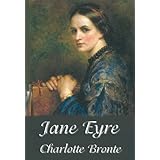
After high school, I decided to try and read the classics that my friends read in different high school and I didn't get to read. JANE EYRE, A TALE OF TWO CITIES, THE SECRET GARDEN and THE COUNT OF MONTE CRISTO soon became a few of my favorite classics.
JANE EYRE was not only a great romance to my impressionable mind, it was a life study of a girl wronged all her life, and yet, she remained true to herself. I. Loved. It. I'm not sure how many times I've read the book. It's one of the few I have reread. I also might own a few of the movies...
(I also love how the covers are reworked over the years, too. It's interesting to see what the designers thought the cover would convey of the story.)
Monday, August 26, 2013
What Were Your Favorite Summer Reads?
By Julie Daines
The kids are back in school and summer has come to an end. Time for homework, writing, and all that responsible grown-up stuff. I'll miss having all the extra reading time.
Some of my summer reads this year:
Daughter of the Forest by Juliet Marillier (Not a children's or YA book, but I loved it.)
The Snow Child by Eowyn Ivey (Also not YA but a lovely retelling of the snow child fairy tale.)
Heart's Blood by Juliet Marillier (Not YA. This is my third time through on this book. If you like Irish-based fantasy, Juliet Marillier is amazing.)
I didn't read much in the children's, MG, and YA category this summer. I usually try to read a lot of YA because that's what I write, but I felt a need for some mature reading.
What did you read this summer that you loved?
Monday, July 8, 2013
Why Do We Read?
By Julie Daines
I recently read a book that asks the question Why do we read?
The author--through the voice of one of the characters--suggests that in literature, everything has a meaning. But it is the experiences in our own lives that shape what the meaning is and how it affects us.
Reading causes us to ask deep questions. Like what is the meaning of my life? Why am I where I am in life? Where will this path lead me? What is good and what is evil? What is love? What is my role in my life's story?
He suggests that as we read, we relate to the characters in such a way that we find the part of our lives or personality that parallels them, and we become them.
He says, "If we take these stories too literally, if we expect our personal lives to always end with a handsome prince, most of us will close our books with shattered dreams. Yet, on the other hand...if we don't take the meaning of those stories literally, if we treat these tales as simply entertainment, we miss the deepest, most life-shanging aspects of the stories. We miss the entire reason they exist." (The Rent Collector by Camron Wright)
I've always believed that reading is more than just entertainment. That by picking up a good book, I'm learning something about life, and more importantly, learning something about myself.
So that's the question. Why do we read?
Friday, July 20, 2012
The continuing saga of the year of the e-book
by Scott Rhoades
I've posted about my gradual conversion to e-books before, but it's been a while. I now feel like I've read enough of them to be able to write somewhat coherently about the (nonsensical) battle of the book vs the e-book.
First of all, let me say that I no longer draw a line between e-books and "real" books like I once did. The words are the same regardless of the medium, and the experience of consuming the words is similar enough, that any thoughts I once had about e-books somehow being less real have vanished. As far as reading goes, they are just as real as paperbacks or hardbacks.
When I started the year with my new Nook Color, a Christmas present from my wife, I expected to read about 35-40 books in 2012, based on my reading history over the past few years since I started keeping track. I read 42 last year, 15 of them on my iPad. The rest were printed.
Right now, I am nearing the halfway point of my 31st book of the year. I think four of those have been printed books. The Nook is a major reason why I've read so much. It's easy to have around and comfortable to hold, especially for big books. I can carry an entire library with me, between the Nook's memory and its memory card. I've even switched my favorite magazine to a digital subscription. It's easy to read without losing the sense of the magazine's design, and I don't have to deal with piles of past issues. I can read with the lights out (although I don't do that much). I can adjust the font size for more comfortable reading, and adjust the brightness of the screen for comfort in whatever lighting I'm sitting in.
That last bit shouldn't be underestimated. One of my friends, who used to be an avid reader, had all but given up on reading because his aging eyes required perfect lighting and a reasonable font size. He bought his wife a Nook Color, tried reading on it, and ended up buying another one for his wife because he took hers over. Now he reads a lot again.
Clearly, this little device has its advantages, But what about disadvantages?
I'm sure there were people who complained when mass-produced books from printing presses replaced the carefully and lovingly made manuscripts of yore. Book lovers (and I consider myself one of them) always talk about how they prefer the feel of a book, the smell of the pages, the tactile pleasures of the printed book. You don't get that from a reader. I have a leather cover for mine that gives it a cozier feel than the hard plastic of the bare e-reader. It helps, but it's not the same. While the Nook is more comfortable to read in bed than a thick book or a large-format book, it can't compete with most books in the coziness battle. This has really become obvious to me in recent months after I inherited some books that belonged to my grandmother and my aunt, who both died in the past year. I pick up those books, several of which were read to me when I was very small, and I can smell Grandma's house. Those books are treasures, for reasons far beyond the wonderful words they contain. Nobody is going to get excited about inheriting my e-book collection when my time comes. Some of my printed books might mean something to somebody, though.
I love my bookshelves. I have shelves in three rooms, all overstuffed with books, too many to fit standing upright, so there are books lying on top of books. Sometimes I like to rearrange the books on the shelf. Sometimes I discover myself standing in front of shelves, just looking at the books. I do this is other people's homes as well. Some people sneak a peek at medicine cabinets. I'm drawn to book shelves. My Nook has a shelf feature to help with organizing, but it's kind of a pain and doesn't have anything like the emotional draw of a well-crammed bookshelf. The Nook shelves have one advantage. You can put one book on multiple shelves. That's kind of cool. But it's nothing like a real shelf.
I also like that, in a real book, I can track the progress of my bookmark through the pages. You can sort of do that with an e-book, but again, it's not the same. The biggest difference is that you can't leave your bookmark where you started your session and then look at how far you've read before you move your marker. I use bookmarks to mark my starting point as much as my stopping point. And I love bookmarks. Whether they are store-bought bookmarks, gifts from my kids, or whatever object I happen to find, a bookmark is a wonderful thing. And I love looking for bookmarks. Sporting event tickets, concert tickets, baseball cards, whatever. I'm always on the lookout for a good bookmark. I have a mug full of them on my nightstand. My favorites lately have been BART tickets. Anybody who spends time in the San Francisco Bay Area probably recognizes that BART tickets are the right size and thickness for a bookmark, and that the two sides and the arrow are perfect for helping you find your place. When I ride BART, I always pay an extra nickel for my fare so I will have a new bookmark. (For those who don't know, the turnstiles keep the tickets when you've paid the exact fare, but if you've paid extra, it gives you the ticket back so you can add to it. Or use it as a bookmark.)
Finally, the thing I've noticed lately about e-books after sailing through them like I have this year, is how much I miss the difference between each book. Every book feels the same on my Nook. Thick, thin, heavy, light, textured, smooth--those differences between volumes don't change. I can't remember where a favorite passage is by it's location in the book. The writing style changes, but other than that, all books are the same. I miss the feel of a different book after I've finished one. The e-books have no real unique substance of their own, like a printed book. This is where I come closest to feeling like an e-book is somehow less real.
So, what does this all mean? I don't see myself going back to reading exclusively (or even mostly) printed books. I like the convenience, and getting older means that the control I have over font size and lighting is a big deal. I really am a convert to e-books.
At the same time, I love my printed books, for all the reasons I mentioned. The actual objects mean something. To use a much overused expression, you'll have to pry my books from my cold, dead hands. But the same is true of my e-reader. Or at least, until it breaks or the battery gives out. (That's another thing. A worn out book, even if it's ripped and pages are missing, can still have value, like some of Grandma's books. A busted e-reader is a dead hunk of plastic and glass.)
Bottom line is, regardless of how it is often argued, this is not an either-or proposition. It is possible to enjoy both e-books and printed books, loving each for its own advantages. The words are the same, and what I get out of each book is essentially the same. There is room in my life for multiple kinds of books, and I'm thrilled to live in a time when I not only have the choice but can choose both.
Subscribe to:
Posts (Atom)