By Julie Daines
I'm not much of an outliner. I've tried it before, and it just doesn't seem to work for me. I wish it did because it seems like a much better way to write. But no. For me, I just can't.
So, I'm constantly asked, how do you work out the pacing of your novel?
Good question.
I am now going to divulge my secret and never-before-spoken-out-loud trick.
I listen to my gut.
Here's how it works:
I'm writing a scene. It's going great. The dialogue is fun, the action intense, and the conflict building. Then suddenly, I get this wrenching, panicky feeling right in the middle of my stomach. It says, "Oh my gosh, this is getting too long. You're dragging it out. Something new has to happen. You've got to move on." My blood races and my fingers shake unsteadily on the keyboard.
"MOVE ON!" it screams.
I listen. I wrap it up and move on. On to the next scene and the next plot point.
Is this a scientific method? No. Will you find it on Blake Snyder's Save the Cat beat list? No. But it works--for me.
Our guts--our writer's intuition--can often be our best friend if we take the time to listen. Feed back from critique partners, from beta readers, pacing, character names, character reactions, almost any part of our novel will speak to us.
Take a moment, consider carefully all sides, and listen to your gut. It is your friend.
When have--or when do--your writerly instincts kick in and help you?

Showing posts with label writing advice. Show all posts
Showing posts with label writing advice. Show all posts
Monday, August 11, 2014

Friday, July 11, 2014
Read Like a Writer: The 100 Rule
More than one local prolific author has said she read hundreds of books in her genre before writing her own well. Hundreds. Good books, bad books, but all in the genre in which she intended to write.
I think this is possibly the best course one could take for writing. And you'd be surprised how many people I know want to write in a genre that they don't actually read: people with a picture book idea who think if they throw some rhyming words together it is publishable without ever cracking a published picture book, people who read nonfiction but want to write dystopian YA, people who only read romance but want to write memoir.
It's normal to be in love with our own ideas. They are our babies, after all. But if we are going to send them out into the world, we have to know what their place in the world could be. And to do that, we have to know something about their peers. (It also helps with writing the dreaded queries ... a topic I'll discuss on my next post.)
So I want to pass on this advice: read in your genre. Read a lot in your genre. Yes, hundreds of books. Okay, start with 20 and build. But make a serious goal.
But when you read, read like a writer.
Reading like a reader is passive, it is as simple as deciding if you "like" or "don't like" a book.
To read like a writer is to question and answer exactly what it is that is and isn't working. In fact, finding a book that you don't like can be of more value than digging into a book that you love. When we love a book, we are taken by it in a visceral, emotional way. It becomes "ours" in a way that our own writing is "ours." It is hard to be critical of your darlings.
On the other hand, good old favorites—the ones you've read over and over, the ones that you feel you already know—can be useful to look at closely because you aren't getting caught up in the plot. You know it well enough to lift the curtain and see what is underneath each page.
When you are reading hundreds, though, you are bound to find those that you don't like. Those can be easier to take apart. Because the undeniable fact is that this book made it. So you have to figure out what it is about the book—the language, the construction, the story, the setting, the dialogue, the characters—that managed to get it passed the gauntlet of queries, slush piles, agents, publishers, and book stores to find its place on this shelf (be it physical or digital).
So, break it down.
Really understand the construction of the book. Think of it as a scaffolding upon which the words hang. Even in a picture book—the most compact of stories—plot is carefully built like the frame of a building. It must be solid and balanced. Writers are engineers. Read like an engineer.
Carefully note dialogue that moves you and dialogue that seems unnecessary. Then figure out why that is. The "why" isn't always that easy to decipher. It may be the language, or it may be the setting in which the dialogue takes place. Also look at the balance of dialogue to exposition. When does the description of a movement from a character "say" more than dialogue? How is it done?
Are there single, carefully chosen words that tell more about the setting than a lengthy description?
Whatever it is you want to learn, you can learn a lot about it by the careful reading of many examples. The more, the better. Say, one hundred.
How long will you take to read one hundred ... like a writer?
I think this is possibly the best course one could take for writing. And you'd be surprised how many people I know want to write in a genre that they don't actually read: people with a picture book idea who think if they throw some rhyming words together it is publishable without ever cracking a published picture book, people who read nonfiction but want to write dystopian YA, people who only read romance but want to write memoir.
It's normal to be in love with our own ideas. They are our babies, after all. But if we are going to send them out into the world, we have to know what their place in the world could be. And to do that, we have to know something about their peers. (It also helps with writing the dreaded queries ... a topic I'll discuss on my next post.)
So I want to pass on this advice: read in your genre. Read a lot in your genre. Yes, hundreds of books. Okay, start with 20 and build. But make a serious goal.
But when you read, read like a writer.
Reading like a reader is passive, it is as simple as deciding if you "like" or "don't like" a book.
To read like a writer is to question and answer exactly what it is that is and isn't working. In fact, finding a book that you don't like can be of more value than digging into a book that you love. When we love a book, we are taken by it in a visceral, emotional way. It becomes "ours" in a way that our own writing is "ours." It is hard to be critical of your darlings.
On the other hand, good old favorites—the ones you've read over and over, the ones that you feel you already know—can be useful to look at closely because you aren't getting caught up in the plot. You know it well enough to lift the curtain and see what is underneath each page.
When you are reading hundreds, though, you are bound to find those that you don't like. Those can be easier to take apart. Because the undeniable fact is that this book made it. So you have to figure out what it is about the book—the language, the construction, the story, the setting, the dialogue, the characters—that managed to get it passed the gauntlet of queries, slush piles, agents, publishers, and book stores to find its place on this shelf (be it physical or digital).
So, break it down.
Really understand the construction of the book. Think of it as a scaffolding upon which the words hang. Even in a picture book—the most compact of stories—plot is carefully built like the frame of a building. It must be solid and balanced. Writers are engineers. Read like an engineer.
Carefully note dialogue that moves you and dialogue that seems unnecessary. Then figure out why that is. The "why" isn't always that easy to decipher. It may be the language, or it may be the setting in which the dialogue takes place. Also look at the balance of dialogue to exposition. When does the description of a movement from a character "say" more than dialogue? How is it done?
Are there single, carefully chosen words that tell more about the setting than a lengthy description?
Whatever it is you want to learn, you can learn a lot about it by the careful reading of many examples. The more, the better. Say, one hundred.
How long will you take to read one hundred ... like a writer?
Friday, March 14, 2014
Sculpting from the Writer's Block
Whenever I feel like I'm hitting writer's block I try to remember that a block is a vessel. A block of wood, a block of ice, a block of marble; they contain all the elements needed for the sculpture that awaits within. I just have to start chiseling at it. So it isn't that I don't have any ideas when I think I have writer's block. I'm not blocked by something. I'm just looking at the possibilities of everything and feeling overwhelmed by it.
Sometimes I just pound away at it. Chisel without thinking. Start writing more and more ideas, more and more possibilities. Like doing improv. Just keep acting out the situation on paper until you find the right one. (See also Jensen girls' great March 7th UCW blog post on "Facing Failure.")
I like to do that, but first I like to (if you'll excuse my using the incredibly popular phrase):
Let. It. Go.
For me, walking away helps.
Walking away doesn't mean that I'm not working on it, though. I recently read that the mind spends nearly 80 percent of its time reviewing experiences and creating hoped-for scenarios (both the way we wish things had happened in the past, and how we hope things will happen in the future).
So while we walk away, our subconscious is doing a great deal of work. (I wish it worked the same way with the treadmill.)
Ever notice that if you try to look at a specific spot at a distance when it's dark, that it is hard to see that spot? You have to look to the side of your desired object, and "see" it through your peripheral vision.
One of my favorite activities for taking my mind away from staring at that issue that I don't know how to fix, is reading poetry. The tight language, the exquisite imagery, that combination of brevity and beauty, does magical things to my brain. It makes walking to the mailbox become an internal iteration on the loveliness of nature. It's a mental breath of fresh air. A cleanse, as it were. Like blowing my nose. Except it's my mind. So, I guess I'm blowing my mind.
So, take a minute. Breathe deep. Take a walk. Read some poetry. Wander through a gallery. Take a few days to do other things. And then go back and just write. Anything. Write it all. Write a million versions of what could happen. Write it in the style of The Muppets, Andy Warhol, Republicans vs Democrats. Write it as a haiku. Write it as a poem written by each character. Blow it all out there.
Blow your mind.
Sometimes I just pound away at it. Chisel without thinking. Start writing more and more ideas, more and more possibilities. Like doing improv. Just keep acting out the situation on paper until you find the right one. (See also Jensen girls' great March 7th UCW blog post on "Facing Failure.")
I like to do that, but first I like to (if you'll excuse my using the incredibly popular phrase):
Let. It. Go.
For me, walking away helps.
Walking away doesn't mean that I'm not working on it, though. I recently read that the mind spends nearly 80 percent of its time reviewing experiences and creating hoped-for scenarios (both the way we wish things had happened in the past, and how we hope things will happen in the future).
So while we walk away, our subconscious is doing a great deal of work. (I wish it worked the same way with the treadmill.)
Ever notice that if you try to look at a specific spot at a distance when it's dark, that it is hard to see that spot? You have to look to the side of your desired object, and "see" it through your peripheral vision.
One of my favorite activities for taking my mind away from staring at that issue that I don't know how to fix, is reading poetry. The tight language, the exquisite imagery, that combination of brevity and beauty, does magical things to my brain. It makes walking to the mailbox become an internal iteration on the loveliness of nature. It's a mental breath of fresh air. A cleanse, as it were. Like blowing my nose. Except it's my mind. So, I guess I'm blowing my mind.
So, take a minute. Breathe deep. Take a walk. Read some poetry. Wander through a gallery. Take a few days to do other things. And then go back and just write. Anything. Write it all. Write a million versions of what could happen. Write it in the style of The Muppets, Andy Warhol, Republicans vs Democrats. Write it as a haiku. Write it as a poem written by each character. Blow it all out there.
Blow your mind.
Monday, November 26, 2012
Is Your Writing Too "Tell-y"?
By Julie Daines
Show don't tell. It's a phrase we hear over and over again. But how can you know if you have too much telling and not enough showing?
Here is a quick list of signs that indicate you are telling instead of showing:
* Using too many adverbs. A few well placed adverbs are great. Less is more.
* Using inactive verbs. Such as to be, including was, am, is, are etc. "She was running through the trees" is weaker than "She raced through the trees."
* Using look or feel. A sign that you're taking the easy way out. "Angie looked sad" or "Mark felt tired" are both weak and telling. See my post on never naming emotions and using an objective correlative instead of telling.
* Using cliches. "flashing a perfect set of white teeth" or "steely gray eyes" tell us what the teeth and eyes look like, but not anything deeper about the character. Find a better, more meaningful way to show it. A way that makes us care.
* Too many adjectives. Just like with adverbs, less is more. Find a better way to write description. When in doubt, limit description passages anyway.
This list is from author Deborah Perlberg's book Writing for Young Adults.
Show don't tell. It's a phrase we hear over and over again. But how can you know if you have too much telling and not enough showing?
Here is a quick list of signs that indicate you are telling instead of showing:
* Using too many adverbs. A few well placed adverbs are great. Less is more.
* Using inactive verbs. Such as to be, including was, am, is, are etc. "She was running through the trees" is weaker than "She raced through the trees."
* Using look or feel. A sign that you're taking the easy way out. "Angie looked sad" or "Mark felt tired" are both weak and telling. See my post on never naming emotions and using an objective correlative instead of telling.
* Using cliches. "flashing a perfect set of white teeth" or "steely gray eyes" tell us what the teeth and eyes look like, but not anything deeper about the character. Find a better, more meaningful way to show it. A way that makes us care.
* Too many adjectives. Just like with adverbs, less is more. Find a better way to write description. When in doubt, limit description passages anyway.
This list is from author Deborah Perlberg's book Writing for Young Adults.
Monday, October 22, 2012
There's No Crying in Writing
By Julie Daines
I'm sharing just a quick writing tip today that I got from award winning author Martine Leavitt.
She states that one of the rules of writing for MG and YA is that your main character can only cry once in the whole manuscript. Maybe twice--if the situation really warrants it.
Why? Tears are like swear words in writing, less is more. Tears tend to jump out of the page and draw excess attention to themselves. It only takes one or two well placed shedding of tears to punctuate the story, any more and it starts to feel like an overused physical cliche.
I've been reading a lot of YA books this fall, and I've seen a lot of weepy main characters. I've come to the conclusion that I agree with Martine.
So before your main character swipes at her eyes, dashes away salty drops, buries her head in her pillow and weeps, or collapses on the floor in sobs, make sure you've carefully chosen the one exact moment when those tears will mean the most.
Any other quick tips you can think of?
See my post on Fall, Shakespeare, Life and Death at juliedaines.blogspot.com
I'm sharing just a quick writing tip today that I got from award winning author Martine Leavitt.
She states that one of the rules of writing for MG and YA is that your main character can only cry once in the whole manuscript. Maybe twice--if the situation really warrants it.
Why? Tears are like swear words in writing, less is more. Tears tend to jump out of the page and draw excess attention to themselves. It only takes one or two well placed shedding of tears to punctuate the story, any more and it starts to feel like an overused physical cliche.
I've been reading a lot of YA books this fall, and I've seen a lot of weepy main characters. I've come to the conclusion that I agree with Martine.
So before your main character swipes at her eyes, dashes away salty drops, buries her head in her pillow and weeps, or collapses on the floor in sobs, make sure you've carefully chosen the one exact moment when those tears will mean the most.
Any other quick tips you can think of?
See my post on Fall, Shakespeare, Life and Death at juliedaines.blogspot.com
Sunday, September 9, 2012
How Do You Find Your Writing Voice? with Author Maggie Lyons

I’m lucky to work
with so many authors at Stories for Children Publishing and the World of Ink
Network. I learn so much from them and I find it helps my personal writing. Not
many authors get to sit on both sides of the writing desk like me, and so when
I get the chance to share some great advice I learn from an author I’m working
with like Maggie Lyons, I’m happy to post it here.
Maggie Lyons is one
of the few authors I have had the chance to see grow as a writer. She was born
in Wales and brought up in England before gravitating west to Virginia’s coast.
She zigzagged her way through a motley variety of careers from orchestral
management to law-firm media relations to academic editing. Writing and editing
nonfiction for adults brought plenty of satisfaction but nothing like the magic
she discovered in writing fiction and nonfiction for children. Several of her
articles, poetry, and a chapter book have been published in the children’s
magazines Stories for Children Magazine
and knowonder!
Maggie is very
talented but is always looking to grow as a writer and when we started chatting
about the different types of voices authors have when it comes to writing, her
comments inspired me. I asked her to share some of those thoughts with you
today.
How Do You Find Your Writing Voice?
with
Author Maggie Lyons
I’m still in the process of finding my
writing voice. Finding is the key
word here. I can’t force my writing voice to shoot up like a hothouse plant. I
can’t learn it like a foreign language. It’s not merely about writing
techniques—asyndetons, paraprosdokians, zeugmas, and that fun bunch of language
tricks. It’s not about narrating in first person, third person, or even second
person. I have to let it appear in its own good time. That’s because a writer’s
voice grows from experience. It represents everything the writer has absorbed
and synthesized over time. It’s about what the writer chooses to write about and
how the writer expresses the results of that choice. It’s about how fictional characters
express themselves and the approach a writer takes to reach the target readership.
In the words of literary agent Rachelle Gardner: “Your writer’s voice is the expression of you on the
page. It’s that
simple—and that complicated. Your voice is all about honesty. It’s the
unfettered, nonderivative, unique conglomeration of your thoughts, feelings, passions, dreams, beliefs, fears and
attitudes, coming through in every word you write. Voice is all about your originality and having the courage to express it.” (http://www.rachellegardner.com/2008/06/the-writers-voice/):
The online researcher is presented with a
plethora of advice for writers intent on finding their writing voice. Some say
that finding your voice is about finding out who you really are—which may be an
unnerving experience, so the idea of courage pops up frequently. “Don’t be
nervous,” Henry Miller advised. Jeff Goins claims that being afraid means
“you’re on the right track … Fear is good”
(http://goinswriter.com/writing-voice/). Writer Holly Lisle insists that “Voice
is bleeding onto the page, and it can be a powerful, frightening, naked
experience” (http://hollylisle.com/ten-steps-to-finding-your-writing-voice/).
Is all this suffering really necessary?
I have not bled all over the pages of my
manuscript. I have not consciously sought out the inner, “real” me, and
therefore have not challenged myself to a battle with fear. I have written
“joyously” as Henry Miller once advised. Does that mean my book does not have
voice?
Others say it is not and never could be
about your authentic self because, as Steven Pressfield puts it, voice is
“artificial” (http://www.stevenpressfield.com/2009/08/the-writers-voice). It’s
something the writer has crafted to convey a particular impression. Put another
way, writers must follow the dictates of their material, a classic example
being J. D. Salinger’s Catcher in the Rye
with its angst-driven teen narrator, Holden Caulfield.
But isn’t this a chicken and egg situation?
My writing voice was driven by the characters and the situations they found
themselves in. Yet the plot, settings, characters, dialogue, actions, and
thoughts are still products of my imagination, even when my characters take
control. Isn’t that also what people mean when they say the writer’s voice represents
what the writer is all about, or am I believing too many impossible things
before breakfast, to misquote Lewis Carroll?
Conscious of my readership, as we writers
should be, I crafted story, characters, dialogue, and narrative style in a way
I hoped my middle-grade readers could relate to. That has to affect the
writer’s voice too and, along with the dictates of the material, can change the
writer’s voice from book to book. This is totally obvious when the narrative is
written in the first person, but voice can be customized in a third-person narrative
just as readily. Jerry Spinelli voice riproars its way through his middle-grade
landmark Maniac Magee but treads softly
and fearfully in his heart-aching Wringer.
Yet, both books are recognizably Spinelli’s. His voice doesn’t lose its flesh
and blood. It simply changes its outfit. That has to be the mark of a real
writer’s voice that even a bad editor can’t obliterate.
_____________

Maggie Lyons hopes her stories encourage reluctant young readers
to turn a page or two.
Her middle-grade adventure story Vin and the Dorky Duet is available as
an e-book at MuseItUp Publishing’s bookstore (MuseItYoung section: http://tinyurl.com/bms7oba),
on Amazon at http://www.amazon.com/dp/B008AK7ALE,
and as a paperback at Halo Publishing International at http://halopublishing.com/bookstore/Maggie-Lyons,
and on Amazon at http://tinyurl.com/9g5oc3c.
Her middle-grade adventure story Dewi and the Seeds of Doom will be
released by as an e-book by MuseItUp Publishing in October and Halo Publishing
International will release the paperback.
More information at:
www.maggielyons.yolasite.com, and
You can find out more about Maggie Lyons and her book through her World of Ink
Author/Book Tour at http://tinyurl.com/9t24kgy
Thursday, March 22, 2012
The Proper Care and Feeding of Conflict
 |
| Erin Shakespear |
"The greatest rules of dramatic writing are conflict, conflict and conflict."
-James Frey
Conflict. Oy...we need a lot of the stuff, right? In our books anyways...in my living room, between the wee natives, not so much.
But how do we make conflict? How do we stuff enough into our stories to turn them into Must-Be-Read-Until-The-Crack-Of-Dawn page turners?
I'm glad you asked! I'll just turn to my notes from a lecture Patti Gauch gave. Yep, I know, I'm talking about her again. I tell you, she's brilliant. And then I'll sprinkle in some wisdom from other awesome people.
The Proper Care & Feeding of Conflict
#1: Start in a hole.
What does you character want? Put them as far away from this as possible. Make 'em suffer! It's for their good. Give them a large dose of internal conflict. They want something so very very badly. It's the thing they want most in the world, but they are their biggest obstruction. Somehow they are standing in their way. Or maybe someone else is. Someone else is keeping them from getting this Great and Grand Thing They Need. Just make it big and make it good.
#2: Dual Desires
Okay this is just an awesome idea. Dual desires? I'd never thought about this before until I read Daisy Carter's blog post about conflict. What if your character wants two equally good things? Or one is good and one is not so good, but he just can't choose? Two different love interest? Yep. that would definitely add some major conflict.
The story...must be a conflict, and specifically, a conflict between the forces of good and evil within a single person. - Maxwell Anderson
#3: Load It Up
You could give your character one conflict. But why not throw in all three? A conflict internally, something he wants desperately, a conflict between those around him, with a friend or family member and a conflict within his environment. Oooooh, that would be a whole lotta conflict.
#3: Load It Up
You could give your character one conflict. But why not throw in all three? A conflict internally, something he wants desperately, a conflict between those around him, with a friend or family member and a conflict within his environment. Oooooh, that would be a whole lotta conflict.
#4: Set the Stage
Let your atmosphere reflect your main tension. Throw in some mist, creaking doors, play with the lighting. Be the stage director. Set your stage.
#5: Pacing
Slow down when you're about to have a big moment. Let your character take time to notice the smells around him, the sounds (back to the creaking), what the floor feels like against his bare feet. Draw out the anticipation. Make us feeeeeeeeel the conflict.
"If you think you're boring your audience, go slower not faster." -Gustav Mahler
"If you think you're boring your audience, go slower not faster." -Gustav Mahler
#6: Fear
When you're watching a scary movie and someone says, "Hey, I know I should stay in the house, with the light and the friends surrounding me because there's that risk of the crazy masked murderer attacking people with a cheese grater and a spoon, but I think I heard a strange noise out there. Yeah, sounded kind of like someone scraping something against metal, almost like a grating sound. I'm going to go investigate. But I'll take this baseball bat with me and I'm sure I'll be fine. Yep, I'll be right back."
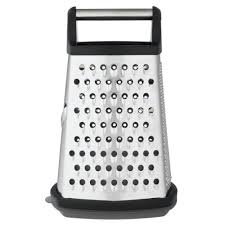
Mmmmhmmmm, yeah...buh-bye now.
Mmmmhmmmm, yeah...buh-bye now.
We sit on the edge of our seats wishing the person would stay in the house and hoping they'll actually make it back safe and sound. Or that they would have at least put on the protective rubber suit hanging beside the door. But there's no hope for that guy. Nope, he's done for.
Make your reader want to shout, "Don't go!" or "Don't do that!"
Fear, yep it works, right?
Make your reader want to shout, "Don't go!" or "Don't do that!"
Fear, yep it works, right?
#7: Give your character a secret
I love secrets. Give your character a good and juicy secret he tries desperately to keep from everyone else. Make him hold onto it. Make it eat him up. Make him go to extreme measures to keep that secret hidden. Or maybe someone finds out. And of course...it's the wrong someone, right?
Thing about your own secrets or your friend's or your spouse's. Think about what your character faults are. Does he try to keep them hidden? Or something about his past? Maybe he did something wrong. Maybe he made a wrong choice. And now he doesn't want those he cares about to know. You can learn a lot about people by the things they try to keep hidden.
And we're all hiding something.
Thing about your own secrets or your friend's or your spouse's. Think about what your character faults are. Does he try to keep them hidden? Or something about his past? Maybe he did something wrong. Maybe he made a wrong choice. And now he doesn't want those he cares about to know. You can learn a lot about people by the things they try to keep hidden.
And we're all hiding something.
#8: Hit "em where it hurts
At Writing for Charity on Saturday, Jennifer Nielsen talked about how we need to know what the worst thing that can happen to our characters is. We don't need to make it happen, but we need to know what it is.
But if you're looking for more conflict, maybe it needs to happen. What is the most dreadful and horrible thing that could happen to your character? What would they do if it happened? Or maybe it almost happens. Oh, the horrible anticipation of watching The Worst Thing Ever coming towards your beloved character. Yep, that will definitely keep us turning the pages.
Or maybe it's just something really really bad. You might not want to completely ruin your character's life. Either way, make it worse, make your character truly suffer. Take away what they want and then dangle it in front of them like a carrot.

#9: Dialogue
Use the dialogue to increase the tension between your characters. What can your characters say to make the conflict greater? Do they lie? Does your main character believe something false he's told? Or maybe your characters is threatened. Or maybe your character swears revenge on the Spoony Cheese Grater (the mass murderer of doom).
#10: Cliffhangers
Ooooooh, I love a delicious cliffhanger. Seriously, this is my very favorite part of writing a chapter. I love coming up with a massive cliffhanger which (I hope) makes the reader's mind explode with questions. Try it out! How can you end your chapter so the reader has to read "just one more"?
#11: Mystery
Can you include a good mystery? Something that keeps your characters wondering? Fill your character's heart (and the reader's) with fear and confusion. Drop clues which only create more and more questions in their minds.
There you have it. Stuff your manuscript will all of that and you'll surely have enough conflict.
"Turn the screws! Blow up the balloon! MAKE IT WORSE!" Patricia Lee Gauch
How do you add conflict to your stories? Do you have a stellar surefire way to throw your character's lives into peril and make us want to keep reading about them?
Or maybe it's just something really really bad. You might not want to completely ruin your character's life. Either way, make it worse, make your character truly suffer. Take away what they want and then dangle it in front of them like a carrot.
#9: Dialogue
Use the dialogue to increase the tension between your characters. What can your characters say to make the conflict greater? Do they lie? Does your main character believe something false he's told? Or maybe your characters is threatened. Or maybe your character swears revenge on the Spoony Cheese Grater (the mass murderer of doom).
#10: Cliffhangers
Ooooooh, I love a delicious cliffhanger. Seriously, this is my very favorite part of writing a chapter. I love coming up with a massive cliffhanger which (I hope) makes the reader's mind explode with questions. Try it out! How can you end your chapter so the reader has to read "just one more"?
#11: Mystery
Can you include a good mystery? Something that keeps your characters wondering? Fill your character's heart (and the reader's) with fear and confusion. Drop clues which only create more and more questions in their minds.
There you have it. Stuff your manuscript will all of that and you'll surely have enough conflict.
"Turn the screws! Blow up the balloon! MAKE IT WORSE!" Patricia Lee Gauch
How do you add conflict to your stories? Do you have a stellar surefire way to throw your character's lives into peril and make us want to keep reading about them?
Thursday, March 8, 2012
How to be a Crazy Writer in 5 Easy Steps
|
| Erin Shakespear |
A few years ago I had the pleasure of listening to the speaker of that fantastic quote above, Patrica Lee Gauch, at Chautauqua, New York (and I got to have lunch and dinner with her, too and have her as my mentor for the workshop...yeah, it was all kinds of awesome....and I am such a Fan Girl). She is the former Editorial Directer of Philomel books and an author herself. I will never forget the experience.
Let me just pause here to say, that if you ever get the chance to listen to this lady speak, go. She could talk about what type of toothpaste she uses and the audience would be mesmerized. She is a brilliant speaker. And she knows her stuff.
I heard three of her lectures, all of them amazing, but the one she was most known for that week was called Going Crazy.
Here are some of her words that I managed to jot down when I wasn't stuck being mesmerized. Prepare yourself. These are really good...
"You're the director of the symphony of your book. Whatever shape or size. It helps to be a little crazy."
"A great book needs the wildness."
"There is no greater wisdom about living than a good book."
"Search for a truly original idea and then let go."
"Stay with a sentence until it gives up the rhythms you need."
"The other half of crazy is authentic."
"There is no room for competence alone."
"Being crazy may give you the permission to be original."
See? What did I tell you? Brilliant.
So, maybe you're wondering to yourself, "How do I become a crazy writer?" I'm glad you asked. Here are my thoughts....
How to be a Crazy Writer in 5 Easy Steps
#1: Decide to write a book. (We'll start with a relatively simple one.)
#2: Push your ideas further. So, you start writing your book. You're coming up with characters, settings, plot twists and this is when you need to ask yourself, "Is there any way to make these things crazier? More unique? Truly different? Wild and extraordinary?"
Push your ideas!
#3: Brainstorm. Sometimes I have a hard time coming up with something new and different. However, if I write the word brainstorm at the top of a paper, it seems to give my mind permission to write down whatever floats across it.
Maybe you're trying to think of a quirk or flaw to give your hero or what challenging things should happen in your soggy middle or a surprise twist to throw at your main character....brainstorm. And let yourself write every crazy idea you come up with. The crazier the better!
#4: Don't play it safe. Do you ever find yourself looking at something you've written and a little voice in the back of your mind says, "It's too ordinary." Maybe your response is, "Nah, it's good enough."
Nooooooooooo! Don't ever settle for good enough. Good enough is the antidote to going crazy. Do not play it safe. Definitely stick with crazy and dangerous.
#5: Push yourself even further. Alright, you think you've got it figured out. Your ideas are crazy unique. Really? Have you really gone as crazy as you can? Think about some of your favorite books. Think about what makes them page-turners. Look at what's made them successful. Chances are it's because the author took a crazy idea and ran with it.
In Patty's lecture she illustrated this point with this comment...
"Dickens must have been crazy to go to those extremes. Didn't Dickens ever take a creative writing class? I mean, Charles, reign it in!" (that last part was heavy on the sarcasm)
***
Alright, there you have it. How to be a Crazy Writer in 5 Easy Steps. Ok....well...they aren't really easy, are they? Yep. It was false advertising. But if you're looking for an easy way to write a great book, you're a different kind of crazy altogether.
Patty ended her lecture with these words...
"I give you a mandate, GO THERE!"
Sunday, February 19, 2012
Knowing Your Readership with Author Kasey Crawford Kellem
I'm lucky to work with a lot of authors between Stories for Children Publishing, its many divisions and the World of Ink Network. Every time I work with a new author, seasoned author or an author at my level of experience, I always learn something new. However, I have found one thing to be true no matter where you are as a writer and what genre you writer for...
You need to know who your readership is before you sit down to write. With this in mind I asked a fellow author to share her insight on this for two reasons, she is a children's counselor and has a unique outlook on understanding children and two because her debut series of books are wonderfully done. She truly as a new author understands how to relate to her readership. So sit back and enjoy this weeks guest post from debut author Kasey Crawford Kellem on Knowing Your Readership.


You need to know who your readership is before you sit down to write. With this in mind I asked a fellow author to share her insight on this for two reasons, she is a children's counselor and has a unique outlook on understanding children and two because her debut series of books are wonderfully done. She truly as a new author understands how to relate to her readership. So sit back and enjoy this weeks guest post from debut author Kasey Crawford Kellem on Knowing Your Readership.

My Mind Over Matter picture books were written for children primarily under the age of 8. I have several young nieces and nephews, and a number of friend’s children in my life who have been an asset in helping me write the books to their level. In fact, my niece, Jackie Kennedy, was five at the time I created the book idea. She and I spent many hours brainstorming what a child believes, loves, dreams and what makes them laugh and relax. The ideas were later tweaked and broadened with the help of the other children and parents in my life. I feel pretty confident the books are appropriately geared towards young children.
The use of simple wording and whimsical illustrations was a must to reach the children. I knew illustrations were key to engaging a child in a book. My illustrator, Janet Hill, has a special touch that appeals to children with her artwork. She knew the use of both animals and children in the books would captivate them. She knew vibrant colors would keep the child interested in the illustrations, too. In order to really engage the young readers, Janet thought it would be a great idea to add a hidden bug in each book. In Believe, a caterpillar is on each page showing how he believes. At the end, the caterpillar shows how he believes in himself and turns into a butterfly. The children love looking for the caterpillar on each page. The other books each have an interactive bug, as well.
My goal and purpose of these books is to teach children resiliency skills. It is rare to go through life without facing obstacles, challenges or adversity. Unfortunately, some people do not have the coping skills to rebound after such life changing events happen to them. Every child should be exposed to Believe (and the other four books when they come out) to learn the skill to prepare themselves for their future. I feel strongly that given the added stressors in life including increased divorces, disabilities, diseases and deaths, children need to learn early how to face these challenges with resiliency.
My books are a good fit for all children no matter how great their life is now, because at some point they will face some sort of challenge and need to be prepared. The books are both a preventative tool, as well as a reactive tool. For those children who have a pretty good life, this book series will teach them the skills to have when, and if, they ever have to face any challenges. For those children already experiencing adversity, these books can help teach them the tools needed to get through the obstacle in which they have been faced. Either way, any child would benefit from learning to Believe they can get through all that life offers. The same is true for my other Mind Over Matter Books and the resiliency techniques: Love, Laugh, Relax & Dream!

Kasey Crawford Kellem, a School Counselor and former Special Education Teacher, has devoted her life to helping children facing adversity be resilient. Kasey created Mind Over Matter (M.O.M.) books to teach children skills to overcome life’s challenges. She has earned a Bachelor’s Degree and Masters Degree in Special Education and an Educational Specialist Degree in Counseling. She is a devoted wife, stepmother, sister, daughter and counselor.

Halo Publishing, Int. and the World of Ink Network are sponsoring Kasey Crawford Kellem's World of Ink Tour this February 2012.
You can find out more about Kasey Crawford Kellem’s World of Ink Author/Book Tour schedule at http://storiesforchildrenpublishing.com/KaseyKellem.aspx. There will be giveaways, reviews, interviews, guest posts and more. Make sure to stop by and interact with Kellem and the hosts at the different stops by leaving comments and/or questions. You will be entered into the main the Book Giveaway each time.
In addition, come listen on February 20, 2012 to Blog Talk Radio’s World of Ink Network show: Stories for Children at http://www.blogtalkradio.com/worldofinknetwork. The hosts VS Grenier and Irene Roth will be chatting with Kasey Crawford Kellem about her M.O.M Books, writing, helping children to be resilient and her experiences. The show airs live February 20, 2012 at 2pm EST. You can listen/call in at (714) 242-5259. (Note: if you can’t make the show, you can listen on demand at the same link.)
To learn more about the World of Ink Tours visit: http://worldofinknetwork.blogspot.com
To purchase any of Kasey Crawford Kellem’s books, visit Halo Publishing: www.halopublishing.com
Subscribe to:
Posts (Atom)