Showing posts with label tips. Show all posts

Thursday, December 18, 2014

Random, Possibly Helpful, Thoughts

One of the problems with regular blogging is that you sometimes feel like every single post should be breathtaking, new, insightful, and most of all exciting. But, truly, none of us has anything new or exciting to say. Maybe different ways to say the same thing. Or new-to-us insights into the same old material. Disclaimer: this is one of those mundane posts that may not have anything new to say, but perhaps it at least offers a new twist on the same old stuff.

Random Thought #1: Strategies for first draft writing come in all different sizes. Some like outlines, some prefer complete plot diagrams, some are pantsers (writing by the seat of your pants). I'm usually a pantser. I frequently know where I'm starting and where I'd like to end up, and maybe a few scenes in the middle, but beyond that, my first drafts are where I discover how I'm going to get from start to finish. I have a lot of fun with rough drafts, even though it's agonizing to create something out of nothing. Here's one thing I've discovered that helps me keep the momentum going--I stop writing before the scene or chapter is over. I send the character into the midst of the problem of the moment, build the tension, and then leave the character there while I go make dinner or whatever. A lot of my writing takes place in the synapses of my brain while I'm doing other stuff, so I let the character be in trouble for a day or two or three and when I come back to the writing, often the character has figured out a great maneuver or solution. I can write that scene, which moves me into the next one, and then I leave the character hanging off the edge of the cliff for a while again.

Random Thought #2: Things not to say to writers. Most of you reading this are writers, so if you'd like to cut and paste this section into an email to all your family and friends, you have my blessing.

  • "That's cute." No, cute isn't what I was going for. I don't do cute. So "cute" to me just means you're not getting what I'm writing. Or else you're illiterate and have no idea what you read. Or maybe you didn't really read it at all. Typically for me, the people who describe what I've written as cute are, in this order: 1) my mother, and 2) any of my mother's friends. So I don't show them my writing anymore. It is now my policy that anyone who calls my writing "cute" will never again have the privilege of reading it. 
  • "How's your great American novel coming?" I hate this for several reasons. First, it implies that I am ignorant of the publishing industry and I think my novel is the ONE and ONLY important piece of literature of my age. Second, it assumes that I have only one novel in me, ignoring the many others I have already written. Also, it suggests that I'm never really going to finish this thing (despite the fact that I have already completed others), because I'm not really working at it, nor do I really have any serious intent of writing professionally. 
  • "I like it." Okay, I know, we all like to hear this--once the thing is published and public. But until then, if I'm sharing my writing with you, it's because I want your feedback, your critique. When you have nothing useful to say, I know you aren't a helpful critiquer, which means, again, that I probably won't be sharing with you anymore. I need critique, by golly, not admiration. I'll call you when the book is for sale, since I know you'll "like it."
Random Thought #3: Why do others want characters to act consistently? People aren't consistent, are we? Nobody I know is consistent. Sure, someone might highly value honesty, say, but they sometimes fudge the truth or tell a "white lie," rationalizing it by saying it spares the feelings of others. I know some people who are definitely one persona when out in public and quite another when they're at home. I think the secret of writing characters who aren't consistent is to make sure the inconsistency doesn't appear just at the moment of highest tension or just jump up when it suits the situation. You have to build the character's inconsistency into the persona and voice of that character from the beginning of the book, so that when the moment comes for that inconsistency to rear its ugly head, it is not a surprise to the reader. Plus, most of us here are children's writers, and kids are constantly changing--sometimes for the better, but not always. So the characters in kid lit should be, I think, inconsistent too. It's a way for them to learn about themselves, see ways that the characters grow, and contemplate their own path. 

There you have it--all the wisdom floating around in my brain today. Well, I do have lots of other wisdom about all kinds of other things, but I don't think you want to here that right now. 

by Neysa CM Jensen
up in Boise, Idaho

Sunday, February 3, 2013

Writing in the Christian Children's Market

This week I thought I would change it up a bit and have Christian Author Elizabeth Kail Arnita share why she writers Christian picture books. This is a huge market many children's writers don't think about breaking into. It doesn't matter what church you go to, the fact is, if you are a Christian this is a market you might want to consider breaking into if you're frustrated with the main stream children's market.


Why do I Write Religious/Christian Based Books for Kids
By Elizabeth Kail Arnita

In Proverbs 22:6, the Bible states, “Train a child in the way he should go, and when he is old he will not turn from it.”  I believe when parents enlighten their children to the truths of Scripture, they are not only giving them “good rules” to live by, but enabling them to become people who make a positive difference by leading lives that go beyond themselves.   

More than ever, it is easy for people to lose their way in this big world.  For me, the Bible is the GPS system for living.  It not only offers directions on where to go, but also gives excellent counsel on how to get back on track when you take wrong turns.  As any good GPS system does, the Word of God alerts the navigator to danger ahead and gives them alternate routes.  It pilots the reader through difficult circumstances and even displays “Points of Interest” that intrigue the most experienced traveler.  We can choose to utilize the life lessons of those who did and didn’t follow God’s instruction to help us reach our own destination.  No matter how lost I am God’s Word always offers a way home and everyone can relate to the trails we find in the Bible no matter our religious background.

What is amazing about the stories in the Bible is they are no different when you look at their structure from any other fictional or historical storyline we might read today. First, each story as a beginning, middle and end. There is a main character, a problem/conflict, antagonist, failures and the stratify ending once the conflict is resolved. You can also see a mentor in each story. Jesus told many stories to his followers in this same way. 

In navigating through life, today’s children face more obstacles than any other generations.  By taking the teachings from the Bible and turning them into a modern day story, children can learn many of life lessons. On the road of life, there are so many bumps, detours, road blocks and wrongly labeled signs; if guidance is not given, getting lost is inevitable.  I have chosen to write stories based on Biblical foundations that offer parents another way to address wise council into their children’s life.   It is my prayer that the lessons open discussions, giving opportunities to delve deeper into some of life’s twists and turns.  By God’s grace, the stories can be used to help people strengthen their relationship with Him or others in their life.


Born and raised in Pittsburgh, Pennsylvania, Elizabeth Arnita is the youngest of 12 children. She learned early in life about family dynamics and the concept of sharing. After graduating in 1983, with a degree in Psychology from the University of Pittsburgh, Elizabeth married Shadi and they have been blessed with four fabulous children. Her love for the Lord has opened her eyes to a world in need and ignited her compassion for those who are less fortunate. She and her husband founded and continue to manage Welcome The Children; a non-profit organization that funds and supports children who are experiencing the reality of poverty. Elizabeth Arnita has designated all of the proceeds from her book sales to support WTC.

You can find out more about Elizabeth Arnita, her books and World of Ink Author/Book Tour at http://tinyurl.com/ayhg69o
 

~~~
As you can see, writing children's lit based off your religious background can help inspire story ideas and give you another avenue to break into print. You don't have to quote scripture, just use a favorite story from the Bible (or whatever book your religion uses). 

If you don't want people to know your religious background...use a pen name. 

My reason for having Elizabeth Kail Arntia share her thoughts today is to show how inspiration can come from all over. In books we read, religion, family history, etc. Don't limit yourself as a writer because you're afraid what others might say.

Jack Remick (poet, short story writer and novelist) once said to me, "A serious writer has a bookself." What he means is to write more than you will even see published. Write more than one book, short story, poem, etc. You must keep writing and building your bookself even if you haven't published a manuscript yet. So open those wings and start flying.


Sunday, October 28, 2012

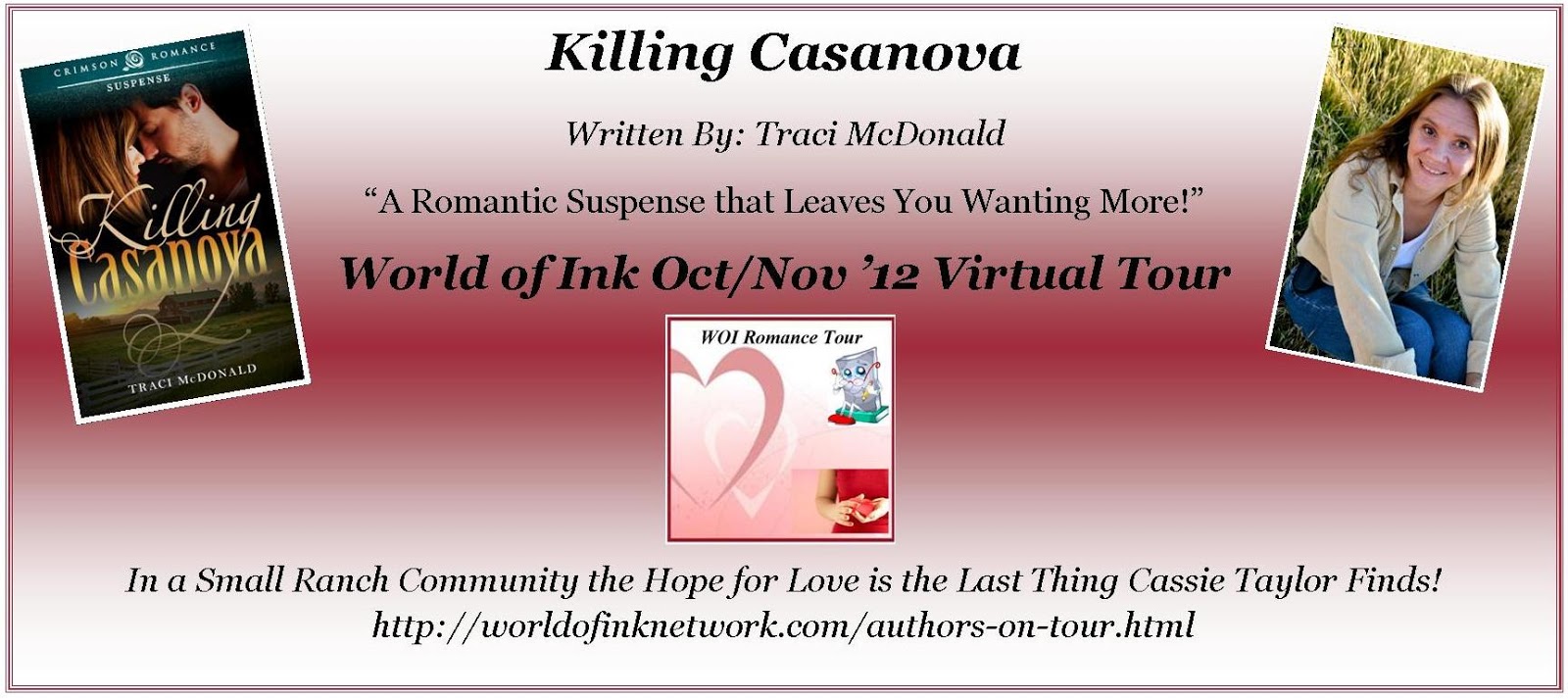
Guest Post with Author Traci McDonald - Inspiration is a Fickle Mistress


The Inspiration I need To Get Myself Writing by Traci McDonald

Inspiration is a fleeting and fickle mistress. There are days when I cannot find the inspiration to do anything but take a shower. While she is an unreliable mistress, work is her solid partner. He is not as pretty or as charming as she is, but he never lets you down. When inspiration is off playing with the fall colors in the orchard, work is harvesting the apples. While inspiration sings her melody, work is playing the music. During inspiration’s pouting tantrums, refusing to cooperate, work is soothing her hurt and anger until she comes to her senses.

I get most of my story ideas from those pure flashes of inspiration that come when the mistress is content, peaceful and whispering in my mind. I write the best I can when she is fed, appeased and lounging beside me; but I get nothing when work does not accompany her.

I find her in music, lyrics, stanza’s voices and instrumentation. I chase her when I read books, blogs, articles and research. I fight her when I am plotting novels, out-lines, short stories and blog posts. I have discovered though that no matter my relationship with inspiration; I can only make dreams come true with work.

The inspiration I need to get myself writing is just a flash of pure imagination. That flash creates a spark in my mind and an idea begins to form. The more the idea turns to something real, the more my fingers ache to sit down and write. She gets my mind and heart flowing, but he puts my hands up on the keyboard and convinces me to give her a voice.


About Traci McDonald: 
Debut author Traci McDonald has been a writer since she figured out how to make words on a page. Traci wrote for English classes like most people, but she wrote everything else in between. Traci won minor competitions with short stories, poetry and lyrics before becoming visually impaired. That is just a political correct way of saying Traci McDonald is blind. Traci lost her eyesight 17 years ago, but it never stopped her from living life and following her dreams. She has struggled with her health and raising kids, prior to the publication of her first novel. Traci is very excited to see her dream in life coming true. She lives in a small cozy town in the Mojave Desert, less than 150 miles from Las Vegas, Nevada.

Traci McDonald has four other books in the process of becoming published and a whole list of others she plans to write.

You can find out more about Traci McDonald and her debut romance novel during her World of Ink Author/Book Tour at http://tinyurl.com/8nejedq

Sunday, September 9, 2012

How Do You Find Your Writing Voice? with Author Maggie Lyons


I’m lucky to work with so many authors at Stories for Children Publishing and the World of Ink Network. I learn so much from them and I find it helps my personal writing. Not many authors get to sit on both sides of the writing desk like me, and so when I get the chance to share some great advice I learn from an author I’m working with like Maggie Lyons, I’m happy to post it here.

Maggie Lyons is one of the few authors I have had the chance to see grow as a writer. She was born in Wales and brought up in England before gravitating west to Virginia’s coast. She zigzagged her way through a motley variety of careers from orchestral management to law-firm media relations to academic editing. Writing and editing nonfiction for adults brought plenty of satisfaction but nothing like the magic she discovered in writing fiction and nonfiction for children. Several of her articles, poetry, and a chapter book have been published in the children’s magazines Stories for Children Magazine and knowonder!

Maggie is very talented but is always looking to grow as a writer and when we started chatting about the different types of voices authors have when it comes to writing, her comments inspired me. I asked her to share some of those thoughts with you today.


How Do You Find Your Writing Voice?
with Author Maggie Lyons

I’m still in the process of finding my writing voice. Finding is the key word here. I can’t force my writing voice to shoot up like a hothouse plant. I can’t learn it like a foreign language. It’s not merely about writing techniques—asyndetons, paraprosdokians, zeugmas, and that fun bunch of language tricks. It’s not about narrating in first person, third person, or even second person. I have to let it appear in its own good time. That’s because a writer’s voice grows from experience. It represents everything the writer has absorbed and synthesized over time. It’s about what the writer chooses to write about and how the writer expresses the results of that choice. It’s about how fictional characters express themselves and the approach a writer takes to reach the target readership. In the words of literary agent Rachelle Gardner: “Your writer’s voice is the expression of you on the page. It’s that simple—and that complicated. Your voice is all about honesty. It’s the unfettered, nonderivative, unique conglomeration of your thoughts, feelings, passions, dreams, beliefs, fears and attitudes, coming through in every word you write. Voice is all about your originality and having the courage to express it.” (http://www.rachellegardner.com/2008/06/the-writers-voice/):

The online researcher is presented with a plethora of advice for writers intent on finding their writing voice. Some say that finding your voice is about finding out who you really are—which may be an unnerving experience, so the idea of courage pops up frequently. “Don’t be nervous,” Henry Miller advised. Jeff Goins claims that being afraid means “you’re on the right track … Fear is good” (http://goinswriter.com/writing-voice/). Writer Holly Lisle insists that “Voice is bleeding onto the page, and it can be a powerful, frightening, naked experience” (http://hollylisle.com/ten-steps-to-finding-your-writing-voice/).

Is all this suffering really necessary?

I have not bled all over the pages of my manuscript. I have not consciously sought out the inner, “real” me, and therefore have not challenged myself to a battle with fear. I have written “joyously” as Henry Miller once advised. Does that mean my book does not have voice?

Others say it is not and never could be about your authentic self because, as Steven Pressfield puts it, voice is “artificial” (http://www.stevenpressfield.com/2009/08/the-writers-voice). It’s something the writer has crafted to convey a particular impression. Put another way, writers must follow the dictates of their material, a classic example being J. D. Salinger’s Catcher in the Rye with its angst-driven teen narrator, Holden Caulfield.

But isn’t this a chicken and egg situation? My writing voice was driven by the characters and the situations they found themselves in. Yet the plot, settings, characters, dialogue, actions, and thoughts are still products of my imagination, even when my characters take control. Isn’t that also what people mean when they say the writer’s voice represents what the writer is all about, or am I believing too many impossible things before breakfast, to misquote Lewis Carroll?

Conscious of my readership, as we writers should be, I crafted story, characters, dialogue, and narrative style in a way I hoped my middle-grade readers could relate to. That has to affect the writer’s voice too and, along with the dictates of the material, can change the writer’s voice from book to book. This is totally obvious when the narrative is written in the first person, but voice can be customized in a third-person narrative just as readily. Jerry Spinelli voice riproars its way through his middle-grade landmark Maniac Magee but treads softly and fearfully in his heart-aching Wringer. Yet, both books are recognizably Spinelli’s. His voice doesn’t lose its flesh and blood. It simply changes its outfit. That has to be the mark of a real writer’s voice that even a bad editor can’t obliterate.
_____________
Maggie Lyons hopes her stories encourage reluctant young readers to turn a page or two.

Her middle-grade adventure story Vin and the Dorky Duet is available as an e-book at MuseItUp Publishing’s bookstore (MuseItYoung section: http://tinyurl.com/bms7oba), on Amazon at http://www.amazon.com/dp/B008AK7ALE, and as a paperback at Halo Publishing International at http://halopublishing.com/bookstore/Maggie-Lyons, and on Amazon at  http://tinyurl.com/9g5oc3c.

Her middle-grade adventure story Dewi and the Seeds of Doom will be released by as an e-book by MuseItUp Publishing in October and Halo Publishing International will release the paperback.

More information at: www.maggielyons.yolasite.com, and


You can find out more about Maggie Lyons and her book through her World of Ink Author/Book Tour at http://tinyurl.com/9t24kgy