Wednesday, June 5, 2013

Mind the Gap

by Deren Hansen

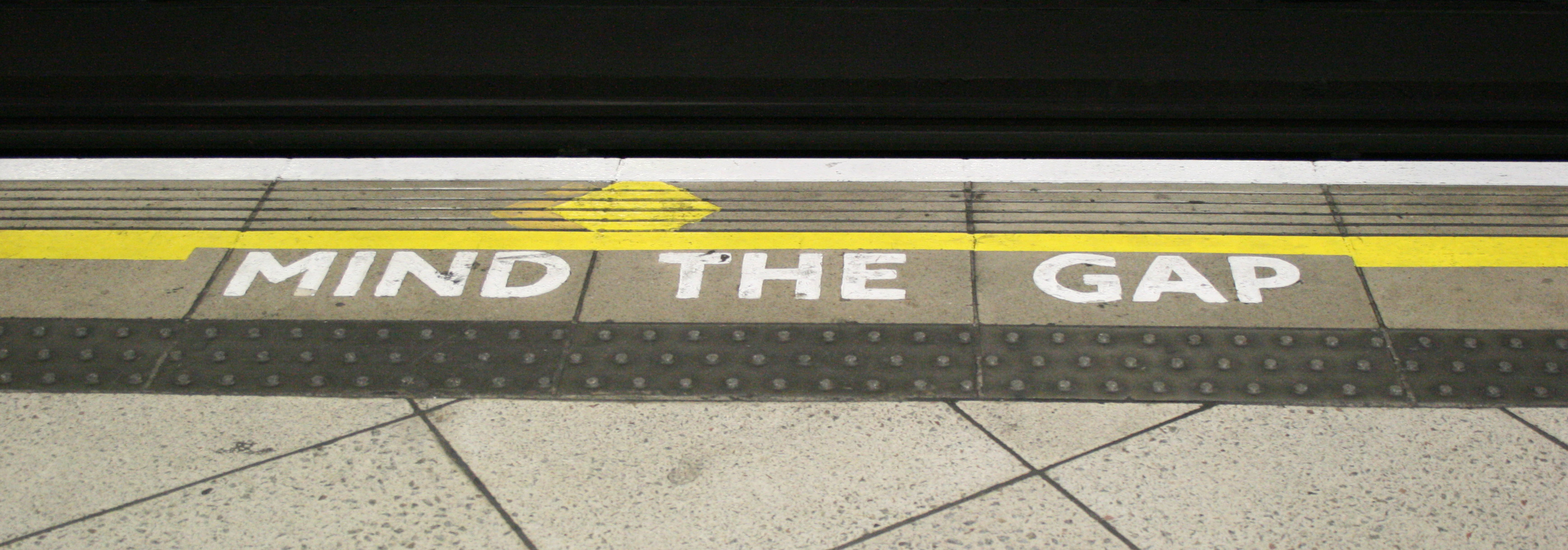
Confession: I've never been to London. But I understand that the Underground is filled with signs encouraging passengers to, "Mind the Gap."

It turns out that this subway signage is particularly good advice for writers.

By Arz at Wikimedia

Jeanette Ingold taught me about the narrative gap:

  • Plot arises from the gap between expectations and results. The protagonist does something but the result is different from his expectations so he's forced to do something else (and so on up to the climax).
  • Keep surprising the character: What does the character want? What would he do to get it? Then show the gap that propels the character to the next scene.
  • You can bring characters on stage to pursue a short-term goal that is related to the long-term goal.
  • Story structure is about choices; choices lead to the next scene. Plot events force your protagonist to make decisions that he thinks will move him toward his goal but instead lead to more gaps until the final conflict.

You may have heard the gap called the character's driver or motivation. Those are fine terms, but the gap better-fits the structural terms in which I like to think.

Why?

Because story can arise from many different kinds of gaps. For example, I once heard Brandon Sanderson explain how setting can be another character (e.g., the landscape of Middle Earth in Lord of the Rings). Brandon argued that the most interesting settings are those where different biomes, topographies, or cultures meet, creating gaps at the point of transition (think oasis and the different desert people who want or need to control the water).

Put another way, if everything is continuous and predictable, characters know what to do and so there's no story. It's only when there's a break in continuity and predictability, a cause with an unanticipated effect, that we have a story to tell.

So writers, mind the gap.

Deren Hansen is the author of the Dunlith Hill Writers Guides. Learn more at dunlithhill.com.

Monday, June 3, 2013

Summer Reading Lists

Need a summer reading list for your kids? Or maybe the neighbor kids?


This is a great link from Library Association for Children:


Sunday, June 2, 2013

WIFYR workshops


The Writing and Illustrating For Young Readers Conference is happening this month. Some of the classes are full, but there’s still time to sign up for the morning sessions. The workshops are a great way to grow your craft. Below are descriptions of the classes. Registration information is at http://www.wifyr.com

AE Cannon - Novel Class
The idea of writing a novel--even if you're one of those people who has "a book in you"--can be daunting.  Ann Cannon's class is designed to help you break the process down into manageable steps.  In addition to giving pointers about the elements of fiction--character, setting, plot and theme--Ann will provide information in a workshop setting about getting started, dealing with "the messy middle, creating believable dialogue, pacing, striking the right balance between "showing" and "telling," and wrapping the whole thing up. Class members will have the opportunity to learn by reading one another's manuscripts, as well as novels by published authors.  Expect to work hard and to have a lot of fun in the process!

Kris Chandler - Novel Class
Everyone should bring roughly twenty pages of a work in progress. We’ll critique ten or so pages at a time and try to get everyone twice. You can opt to have the same ten pages done twice. We’ll have an instruction period each day where we cover critical elements of story like plot, character, dialogue, voice, research, etc. We’ll look at examples of authors who have done these things successfully and talk about market place strategies.  Everyone will contribute written comments on the manuscripts we are critiquing, including me. You will also be required to laugh at least one of my jokes and have your hair in artistic disarray by the end of the week.

Cheri Pray Earl - Introduction to Writing for Children Class
From Scraps to (manu)Scripts: Conquering the Murky Middles: Rescue those stalled-out novel manuscripts from your computer boneyard and bring them to this new, innovative, paddling-through-the-murky-middles workshop. This is a workshop for our faithful writers who have polished two or three beginning chapters in a WIFYR workshop in the past, or who have made those first few chapters top notch at other conferences (or on their own), but who need help getting the rest of their novel on paper and submission-worthy.
Workshop Goal:  “Finish, Polish, and Submit” is the mantra of this workshop. For five days, you will work harder than you have ever worked before (and so will Cheri), you will work smarter than you have ever worked before, and you will experience writing success like you have never experienced before.
Preparing for the Murky Middles Workshop: Prior to the conference, students will submit a murky-middles portion of their work (two to three of their murkiest chapters), a brief description of the problems of those two-to-three middle chapters, and a chapter-by-chapter synopsis (two sentences per chapter) of the entire novel, from the first chapter to the last. This is the material you will work with for the five days of WIFYR, so choose wisely.
Workshop Content: Each day, Cheri will share a different solution to novel-writing problems including Plot, Conflict, and Pacing; Character Development and Voice; Setting and Description; Scene, Summary, and Dialog; Developing Themes and Introducing Backstory.
Daily Assignments: Participants will write and workshop specific scenes that emphasize plot, pacing, character development, moral conflicts, and so forth, in addition to revising their middle chapters and, in some cases, writing new ones.
Final Project: Participants will present two to three completely revised and murk-free middle chapters on the last day of the workshop, a revised and annotated plot outline, a plan for finishing their novel, and . . . they will confess their love for writing, each other, and above all, their workshop teacher.

Sharlee Glenn - Picture Book Class
In this class we will focus on mastering one of the most difficult forms of writing known to humankind--the picture book.  We will begin by examining such fundamental questions as:  What is a picture book?  How is it different from, say, a magazine story?  What makes a good picture book?  During our time together, we will discuss both the craft of writing (focusing on such things as the writing process, rhythm, meter, cadence, rhyme, repetition, sensory language, figurative language, and imagery) and the business of writing (the submission process, publication, marketing, etc.).  Since this is an intensive, hands-on workshop, participants are asked to bring at least one polished picture book manuscript with them to be shared, critiqued, and revised.  They will also be expected to produce from 2-5 new manuscripts throughout the course of the week.

Mette Ivie Harrison - Full Novel Class
As a class, we will be reading complete YA/MG manuscripts from all the participants. Manuscripts need to be sent electronically by May 15 and must be under 80,000 words. Please make sure your manuscripts are as perfect as you can possibly make them on your own. Ideally, you will already have had feedback on part or all of the manuscript from workshops or writing groups. 

This is a workshop for people who are serious about publication. Please be ready to work hard and revise during the week we’re together, so that you can make sure that you have fully understood the critique comments and are able to begin to integrate them.

Matt Kirby - Advanced Class
My Advanced Novel class will explore the deeper aspects of narrative structure and voice. Students can expect an in-depth critique and discussion on their work from me and from their workshop peers.

Martine Leavitt - Specialty Novel Class
Bring ten pages of a novel in progress, whether new or in revisions. Critiques will be handled at an advanced level. Feedback will be constructive but tough, aimed only to work out any flaws and improve your story. The remainder of the workshop will be devoted to helping you generate or improve your novel. We’ll discover more about your characters, unearth and firm up plot, play with setting, and write parts in the beginning, middle and end of your story. By the conclusion of the workshop you will have gained a stronger sense of your story and the tools to help you go home and write your best novel yet.

Jake Parker - Illustrator Class
(No description of the class, but Jake’s bio information.) Jake Parker is a freelance illustrator, designer, and comic artist.  He is the creator of the Missile Mouse graphic novel series published by Scholastic and "The Astonishing Secret of Awesome Man" published by Harper Collins. For the last several years he worked for Blue Sky Studios creating sets and environments for feature films like Horton hears a Who, Rio, and Epic.  Now he lives in Utah with his wife and children working on picturebooks, comics, and other freelance projects. His latest picture book is "Apples A to Z" published by Scholastic and illustrated "The Girl Who Wouldn't Brush Her Hair" published by Random House coming out this Fall. You can find out more about Jake at www.mrjakeparker.com  

J. Scott Savage - Middle Grade Novel Class
(Could not pull up his class information)

Carol Lynch Williams - Writer's Boot Camp
For writers who want a bit more private instruction on their writing (10 attendees). It includes:
    Smaller class size (10 attendees)
    55 pages of your novel discussed OR three picture books
    Synopses and/or cover letters discussed
    More individualized attention
    Special guest visits
    Marketing instruction
    10-minute pitch session with an editor or agent

Friday, May 31, 2013

Growth Through Experimentation

I recently came across an interesting quote by singer Tom Waits, who was talking about his 1983 album, a departure from his previous work on which he played mostly piano and guitar.

"Your hands are like dogs, going to the same places they've been. You have to be careful when playing is no longer in the mind but in the fingers, going to happy places. You have to break them of their habits or you don't explore; you only play what is confident and pleasing. I'm learning to break those habits by playing instruments I know absolutely nothing about, like a bassoon or a waterphone."

I think we need to take the same approach with our writing, exercising our minds by trying new things. Maybe our experiments aren't meant for any eyes but our own, but by moving away from the familiar, we prevent our writing from becoming too comfortable, from always "going to the same places."

Try writing a few paragraphs in a totally new style. Maybe write a make-believe long lost page or story by a favorite author whose writing is nothing like yours. If a certain style of writing makes you uncomfortable when you read it, try writing it. Write something that makes no sense but exercises your mind by exploring new directions. Play with words. Write a poem. Write something you wouldn't want your religious leaders to discover, even if you destroy it immediately afterward. Something from a point of view opposite of your own. Anything that gets you out of your usual patterns, no matter how difficult it is or how bad it turns out will help you grow.

If you remember those years when most of your physical growth took place, you'll probably remember them as uncomfortable. Your joints hurt. You were gangly and awkward and looked a little silly. Your clothes never fit right because you outgrew them somewhere between the cash register and the store exit. To grow artistically, you need to go through the same discomfort.

Even if the work you want to publish is firmly within a single genre or style, you want to improve, to grow as an artist and storyteller. If you play around in the bogs of discomfort, even if only in short practice pieces, you will keep your writing sharp and fresh, and avoid getting into the rut of formulaic predictability.

Wednesday, May 29, 2013

The Essence of Writing: Saying What You Mean

by Deren Hansen

In Fowler's Modern English Usage, (H. W. Fowler, Second Edition, Oxford University Press, 1965) he explains that ambiguity "... misleads the reader only momentarily, if at all, but makes him think the writer a fool for not being able to say what he means." Fowler goes on to say, "... the purpose of this dictionary is to help writers to express themselves clearly and accurately ..."

Organizing ideas is the essence of writing, but when we talk about writing, our discussions usually focus on the how: rules, conventions, and techniques. We rarely pay attention to the what: having something to say that's worth saying so you can deploy all the rhetorical tools in the how toolbox to say it clearly.

Why do we avoid giving advice about the substance of someone's writing?

The practical answer is that the what of writing is really an editorial concern. Most of us who give writing advice usually have neither the time nor the expertise to critique a piece on its merits. And of course when we're talking about fiction we're picking our way through the swamp of subjectivity.

The tension between form and substance is an ancient one that likely goes back much further than Socrates' famous complaint about the schools of rhetoric that taught students how to win arguments without regard to the merits of the case. But form and substance are really two aspects of the same thing: if you have nothing to say or if you say it poorly it will mean nothing to your readers. Good writing begins with a clear understanding of what you mean to convey, and is demonstrated through your ability to say what you mean.

Deren Hansen is the author of the Dunlith Hill Writers Guides. Learn more at dunlithhill.com.

Monday, May 27, 2013

Series or Stand-alone?

by Julie Daines


I feel like books series are reaching epidemic proportions. It's hard to find a book that's NOT part of a series.

From a marketing standpoint, I can clearly see the advantages. Hook the reader and sell three books instead of one. More book sales equals more money. The author creates a name and a brand for themselves, and everyone's happy.

Or are they?

From a reader's standpoint, I'm not sure I'm sold on the series approach. Don't get me wrong, some series are amazing.

But in writing a series there are some inherent problems, and unless the writer is unusually skilled, these problems can lead to very disappointing books.

Here are the two issues that concern me the most:

Problem 1- Once the first book is complete, if the author has done their job well, so is the character arc. The character arc is one of the main story elements that keeps a reader hooked and reading to the end. Consequently, the next few books in the series often fall flat. How many times have you LOVED the first book in a series and the rest were only okay?

Problem 2- The first book leaves you hanging because the character arc is incomplete and the conclusion unsatisfying. This is a very popular writing trick to get readers to buy the next book. But whenever I read a story like this, I have to ask myself if the author considers me a reader or a number. Are they writing to perfect the craft or to make a sale.

This is where the tricky part comes in, because perfecting the craft and selling books are both important. It's a fine and difficult line to walk. As an author, I can relate. We all want to write the best story we can, but unless that story sells, we're just people sitting in our sweatpants at a computer all day.

Do authors who write series sell more books? It's very possible that they do.

Do authors who write stand-alone books win more awards? It seems to me they do--although I haven't done official research.

What are your thoughts? Do you prefer a series or stand-alone?

Saturday, May 25, 2013

Book or movie?


Which is better? Audiences often are disappointed in the movie adaptation of a book. For the maker, the question has a different connotation. Which is better to create, a written piece or a video?

I am finishing a video project with students at school and besides the time it takes from my writing time, it’s a structure I’m not at ease with. They both have similarities. The difference is matter of presentation, the kind of format the story is presented in.

Each have a creative, inventive phase. It starts with a vision for an idea and then you work to develop it. It simmers and stews as your subconscious mulls it over while you sleep or mow the lawn or whatever. Then you write the rough draft. In the case of video-production, you go about planning the scenes and what the actors are to say and do. Video is a visual thing so you have to think in terms of what the camera sees. Both mediums have a creative, rough draft stage where you put ideas out there.

Then comes the revision. Once the idea is roughed out, you revise to clarify, simplify, and smooth out the edges. Revision cleans up the garbage. Editing is to video what revising is to story. You take raw footage and edit out the parts you don’t want.

They differ in the revision. Writing is a solo chore and critique groups help find areas that don’t work. Video production is more of a group effort. There is no established method of critique. More people are involved in the development, but there is less opportunity to have unbiased outside opinion.

The purpose of each is to entertain or to inform. My preferred style is written novel mode. I know it; I’m comfortable there. 

Wednesday, May 22, 2013

Traditional Publishers are Actually Trade Publishers

by Deren Hansen

Whether we call the new mode of publishing self-, indie, or artisan, the most consistently used label for the formerly dominant publishing model is, “traditional.”

As people who work with words, we understand how important it is to use the right ones. There are, for example, some circles where traditional means, “time-tested values,” not, “hopelessly stuck in the past.” But the real problem with the label, “traditional,” isn’t whether it implies the business model is good or bad but that it doesn’t accurately describe the business model.

Major commercial publishers are, “trade publishers,” because they published to the book trade. They sell their wares to booksellers, not readers.

“But,” you may object, “readers are still the ones buying the books, so what’s the big deal?”

Consider the problem of children’s books: children don’t buy books. Thanks to the inconvenient fact that very few children have disposable income, essentially all children’s books are purchased by well-meaning adults. This means that the book must appeal not only to the child for whom it’s intended but also to someone in the circle of adults with an interest in supplying that child with reading material. It’s not uncommon for the two constituencies (children and adults) to have very different reasons for choosing a book.

Booksellers, of course, want to sell books. The ideal book for a bookseller is one that every reader will want. Readers want to buy books that will entertain, educate, or provide an experience. The ideal book for a reader is one that speaks to his or her specific needs and desires. Absent that ideal book, readers choose the ones that seem to best suit their needs from what’s available. It’s not uncommon for the two constituencies (booksellers and readers) to have very different reasons for choosing a book.

Booksellers order the products they resell from trade publishers. Trade publishers don’t deal directly with readers. That means trade publishers are primarily in the business of convincing booksellers to offer their wares to the reading public. Convincing readers to read their books is at best a secondary concern for trade publishers.


Deren Hansen is the author of the Dunlith Hill Writers Guides. Learn more at dunlithhill.com.

Sunday, May 19, 2013

For Young Readers


Not to harp about it, but WIFYR is just around the corner. There are still few spots available. You can sign up here.

I am an assistant this year and am excited to be working with Ann Cannon. She is a regular at the conference and I try to attend her afternoon sessions when I can. Ann writes at many levels in children’s literature. She’s done PB to YA. You can read her each Saturday in the Salt Lake Tribune and thus knows how to entertain adult readers as well.

Carol Williams, again, has assembled a host of talented speakers and faculty. Cheri Pray Earl, Sharlee Glenn, Steve Bjorkman, J Scott Savage, Kris Chandler, Martine Leavitt, Matt Kirby, and Mette Ivie Harrison all join Ann and Carol in running workshops. Something new this year, there are mini-workshops that participants can sign up for. Each morning focuses on a different theme, from blogging to screen writing and short stories to rhythm, rhyme, and riddle. Elana Johnson, Alison Randall, Krysten Crow, and Marty Nabhan are running these sessions.

Also in attendance will be an editor and two agents. Carol has pulled in Alyson Heller from Aladdin Books. The agents include Ammi-Joan Paquette of the Erin Murphy Literary Agency and Steven Fraser from the Jennifer De Chiara Literary Agency.

The Utah State Poet Laureate, Lance Larson will be the keynote speaker in Thursday afternoon.

The conference is a great place to grow your craft. I have yet to do a LTUE and have heard high praise for LDStorymakers, but the For Young Readers conference is refreshing. Any effort to cultivate your writing skill is satisfying. Carol’s conference is the place to do it.